
Guide to Citrus Processing Equipment: From Extraction to Packaging

Transforming fresh citrus fruit into high-quality juice and valuable by-products is an intricate balance of chemistry, physics, and precision engineering. Understanding the science behind citrus processing reveals how specialized equipment works in harmony to maximize yield, preserve nutrition, and deliver the consistent juice quality that consumers demand.
Whether you’re entering the citrus processing market or expanding existing operations, success depends on understanding both the scientific principles and the equipment that brings them to life. Modern citrus processing science employs a collection of carefully controlled steps, allowing processors to optimize each variable in the journey from grove to glass.
This comprehensive guide walks you through every stage of commercial citrus processing. You’ll discover the essential equipment needed at each step, the science behind how it works, and the critical factors that separate exceptional operations from average ones.
From the moment fruit arrives at your facility to the final packaged product, we’ll show you how to build a processing line that delivers quality, maximizes yield, and captures every revenue opportunity.
Fruit Reception & Preparation: Where Quality Begins
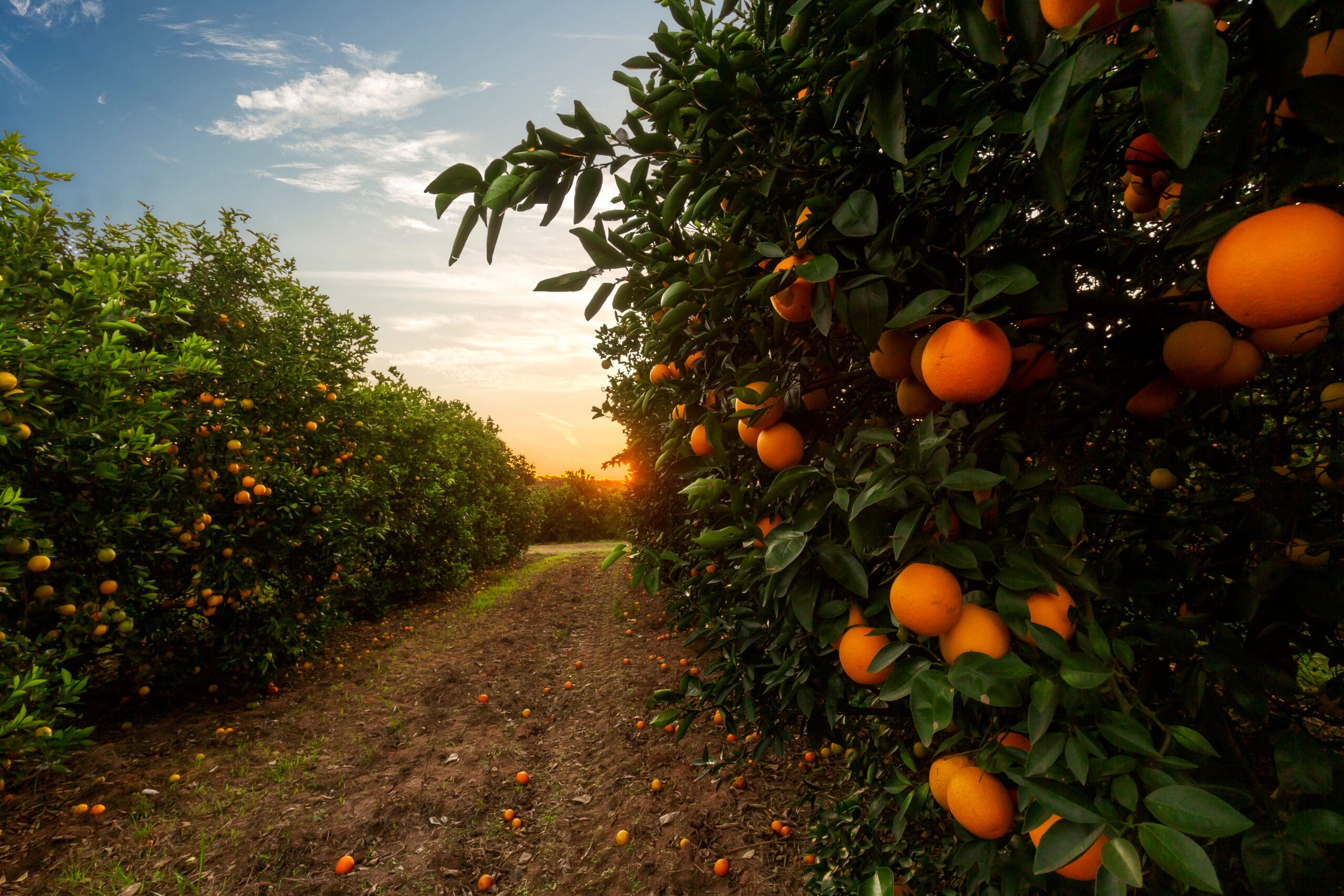
The quality of the raw material directly impacts your final product. Reception and preparation of the fruit are critical control points that protect both the final product quality and downstream equipment. The science here is straightforward but unforgiving: contaminated or damaged fruit that enters your line compromises everything that follows.
Harvest Maturity and Rapid Delivery: Foundation of Quality
What steps ensure that fruit arriving at the plant is at peak quality for extraction?
Success begins before fruit reaches your facility. Harvest maturity—specifically the ideal Brix-to-acid ratio—determines whether your fruit is ready for processing. For oranges, this typically means a ratio of 12:1 or higher, indicating full flavor and optimal sugar content has developed in the fruit. Harvesting too early yields thin, tart juice that disappoints consumers; too late and you sacrifice acidity that provides brightness and balance.
Equally critical is rapid delivery. Once picked from the tree, citrus fruit continues to respire, consuming sugars and acids that define juice quality. The window between harvest and processing should be kept within 24-48 hours to prevent quality loss. Every additional day in transit or storage depletes the very compounds you’re trying to capture in the bottle.
For processors, sourcing fruit from multiple growers across different regions, this creates logistical complexity. Coordinating harvests, managing inbound shipments, and balancing storage capacity with processing throughput requires careful planning. The reward for getting it right is consistent raw material quality, the foundation everything else is built upon.
Unloading and Storage
Fresh fruit requires careful handling from delivery trucks to storage bins. The physics of fruit handling matters—excessive drops or rough handling bruises the fruit, rupturing oil glands in the peel and causing bitter compounds to migrate into the flesh. Improper handling of the fruit can cause physical damage to the fruit, which leads to poor yield during downstream juice extraction. Proper reception systems prevent this damage while maintaining fruit integrity.
Depending on your processing capacity and harvest schedules, you may need controlled storage. The deterioration of citrus increases with temperature, so climate-controlled holding rooms (typically 45-50°F) slows metabolic activity and preserves fruit quality for several days if needed.
Fruit can either be stored in large multilevel bin structures or in individual smaller bins that can hold around 900 lbs of fruit. From storage they can be fed to bin dumpers or onto conveyor belts that enter the processing line or feed into smaller surge bins that are metered into the processing facility.
Essential Preparation
Equipment Washing Systems
Washing systems remove field debris, pesticides, and microbial contaminants that could compromise product safety. The science of washing involves balancing mechanical action (brush contact and water pressure) with chemical sanitizers (typically peroxyacetic acid solutions). Modern systems use brush washers and spray jets that thoroughly clean the peel without damaging the fruit or driving contaminants into the peel tissue.
How can processors achieve food-safety compliance while scaling production?
Meeting safety requirements at scale begins with effective washing and sanitizing. Water temperature matters—too cold and sanitizers lose effectiveness; too hot and you can damage the fruit. Most operations maintain wash water at 70-90°F with sanitizer concentrations validated to achieve a 5-log reduction in target pathogens.
Modern washing systems incorporate continuous monitoring of sanitizer concentration, water temperature, and contact time—the critical parameters that determine efficacy.
Automated controls adjust chemical injection dosing rates as water quality changes throughout the production day, ensuring consistent pathogen reduction regardless of processing volume.
This level of control is essential for food-safety compliance, particularly as operations scale. What works for 10 tons per day may not translate to 100 tons per day without proper engineering and control systems. The investment in robust washing systems protects both product safety and your operation’s reputation.
Sorting and Inspection
Fruit is conveyed over a roller spreader where ‘Fruit Grading’ occurs. Removing defective fruit and foreign matter such as sticks and stems, at this stage prevents quality problems and protects extraction equipment from unnecessary wear. Sorting is especially important when running fruit directly from the field, where more debris is common.
Fruit sizing is also a critical preparation step because both Brown reamer-style and inline whole-fruit extraction technologies depend on matching fruit size to the correct juice extractor model. For Brown systems, fruit is typically separated into specific size ranges, so each orange, lemon, grapefruit, or lime is delivered to a properly sized cup and reamer, helping maintain extraction efficiency, yield, and peel-oil control.
Inline systems also require consistent sizing so whole fruit seats correctly in the extraction cups, allowing the cup, cutter, and compression sequence to perform as designed. In both technologies, accurate sizing reduces misfeeds, minimizes mechanical damage, improves throughput, and helps operators maintain consistent juice quality as incoming fruit size varies by variety, grove, and season.
The BOSS System Advantage
By automatically adjusting line speed to the fruit size distribution entering the system, BOSS helps keep each Brown extractor properly loaded without overfeeding or starving the machine. This controlled feed approach supports smoother operation across mixed-size fruit lots, reduces the need for recirculating return fruit, and helps maintain steady extractor efficiency throughout the production day. The result is a simpler, more automated front-end system that can improve uptime, reduce operator intervention, and keep throughput aligned with the actual capacity of the installed extractor configuration. The upgraded sizing system works by measuring the amount of fruit of each size and determining when the line becomes over or underloaded and making automatic adjustments to the throughput.
Juice Extraction
The heart of any citrus processing operation is extraction—where raw fruit becomes valuable juice and pulp. This stage showcases the intersection of mechanical engineering and fruit biology. Understanding both is essential to maximizing the value you extract from every ton of fruit.
The Biology of Citrus Fruit
Citrus juice is stored in thousands of tiny juice vesicles (sacs) embedded in the fruit segments. These vesicles are surrounded by a network of membranes, and the whole structure is encased in the albedo (white pith) and flavedo (colored outer peel). The extraction challenge is rupturing these vesicles to release juice while avoiding contact with the albedo and peel, which contain bitter compounds like limonin and naringin. The level of these bitterness components vary depending on the fruit variety.
The peel also contains glands filled with citrus oil—valuable for their aroma but capable of creating bitter off-flavors if incorporated into juice at elevated levels. Successful extraction is a delicate balance of maximizing juice recovery, while minimizing unwanted compounds.
Two Primary Extraction Methods
Reamer-Style Extraction
Reamer-style extraction mimics traditional home-kitchen juicing equipment. Fruit is halved, each fruit half is held in a cup, and each piece is pressed against a rotating reamer that physically ruptures juice vesicles through mechanical shearing. This method produces exceptionally clean juice and recovers intact pulp cells. In addition, it introduces minimal peel oil (typically 0.015-0.025% by volume) because the peel surface has minimal direct contact with the extracted juice.
The physics are simple but effective. The reamer’s grooves penetrate the fruit segments, creating channels for juice to flow while the cup holds the peel stationery. It’s ideal for premium, high-quality NFC production where juice flavor and low oil content are paramount.5/8” up to 5 ¾”.
Inline (Whole-Fruit) Extraction
Inline (whole-fruit) extraction is another popular option in commercial citrus processing. Whole fruit enters the extractor where precision-engineered cups and plungers compress the fruit from all directions. The mechanical sequence is carefully choreographed:
- Fruit Loading: Sized fruit drops into the lower extraction cup
- Initial Compression: The top cup descends, beginning to compress the fruit
- Core Cutting: A tube cutter penetrates the fruit’s center, separating the core and creating a path for juice flow
- Maximum Pressure: Continued compression ruptures juice vesicles, forcing juice through perforated strainers
- Peel Ejection: The spent peel “turns inside out” and is ejected from the system
This method delivers high capacity, yield (typically 50-60% juice recovery by weight), and efficient separation of juice, peel, and core components. Modern inline extractors can process 400-800 fruits per minute depending on the strokes per minute the machines are set to.
How can processors maximize juice yield while preserving quality?
Reamer-style extractors incorporate adjustable parameters that operators can fine-tune for current conditions. The Brown Juice Extractor has two adjustable points, air pressure, and micrometer. The pressure controls how much the fruit half in the cup is pressed against the reamer. The micrometer controls the clearance distance between the cup and reamer. Both adjustments can be completed while the equipment is running. A sample of the extracted peel halves can be collected, examined and adjustments are made as needed to maximize juice yield and quality.
The key is understanding that extraction is a balance. Too little pressure or too much clearance leaves juice in the peel; too much pressure or too little clearance space crushes the albedo and releases bitter compounds. The optimal point varies by fruit variety, size, and even time of season as peel thickness changes.
Inline extractors allow adjustment of compression force, cycle timing, and strainer specifications. For thick-skinned varieties like grapefruit, slightly higher pressure with longer cycle times maximizes yield without exceeding target oil content. For thin-skinned varieties like mandarins, gentler pressure prevents peel rupture.
Peel-oil management is essential for flavor control. While citrus oils contribute desirable aroma in small quantities, excessive levels create harsh, bitter notes that consumers reject. Target levels typically range from 0.020-0.035% by volume, depending on juice type and market preferences.
Operators monitor oil content throughout production—through frequent laboratory testing—when using the Brown Juice Extraction technology, adjustments can be made to control the level of oil in juice. This active control transforms extraction from a fixed process into a responsive system that adapts to changing conditions throughout the production day.
Critical Selection Factors
Capacity Matching: Your extractor must align with processing volumes. Under-sizing creates bottlenecks; over-sizing wastes capital and increases per-unit costs. Brown International’s juice extractors are engineered for operations ranging from regional processors to industrial-scale facilities processing dozens of tons per hour. A facility must understand the size ranges (%) of their fruit to match the required size and number of the juice extractors to maximize capacity. Fruit feeding is critical to maintain high efficiencies on juice extractors.
Versatility: Can your equipment handle oranges, lemons, grapefruits, and limes? What about varying fruit sizes and peel thicknesses across growing seasons? Equipment flexibility prevents costly downtime during variety changes. Brown equipment is equipped to handle all common citrus varieties.
Durability and Serviceability: Industrial extraction equipment operates in demanding, high temperature, and acidic environments. Robust construction using corrosion-resistant materials ensures longevity and food safety (typically stainless steel), while thoughtful design that provides easy access to wear components minimizes maintenance downtime.
The extraction stage defines your operation’s productivity. Choose equipment that gives you control over this critical process.
Product Quality: For NFC juice, flavor and quality is everything. Brown’s reamer-style extraction is especially well suited for premium NFC because it is designed to extract juice without excessive contact with the peel and albedo, which are the main sources of bitterness.
Juice Finishing & Refinement: Precision Product Control
Raw extracted juice contains pulp sacs, seed fragments, and peel particles. Finishing equipment refines this raw juice into the specific product the market demands—whether that’s pulp free juice or a product with a specific pulp content.
The Finishing Process
What is the most effective way to manage pulp, oil content, and texture in juice products?
Managing pulp levels, oil removal, and juice stability represents one of the biggest operational challenges in citrus processing. The answer lies in advanced separation and clarification systems that give processors precise control over these parameters.
For refining product from the Juice Extractors, raw juice is fed to the primary finisher, forcing extracted juice through precisely sized screens under controlled pressure. The screen separates liquid juice from pulp and solids, with screen mesh size determining final pulp content. This process is highly adjustable—processors can produce anything from pulp-free juice to high-pulp products simply by changing screens and adjusting operating parameters.
Fine screens produce low-pulp or pulp-free juice. Larger openings allow more pulp to pass through, creating “high pulp” or “extra pulp” products. By changing screens and adjusting operational parameters, a single finisher can produce multiple product specifications from the same raw juice stream.
The Brown finishing system utilizes two stages of finishers to maximize yield and recover whole intact pulp. The primary finisher is either a Model 6000 Centrifugal type finisher or a Model 2503 Screw finisher. Primary finishing targets removal of the pomace and seeds from the raw juice. Secondary finishing further separates the juice and pulp. If the primary finisher is a Model 6000, then the secondary finisher stage will be a Model 2503 screw finisher in series, with a smaller subsequent screen size. If the primary finisher is a Model 2503 screw finisher, then a screw or a paddle finisher can be used as the secondary finisher, depending on the amount of pulp and yield requirements. If the customer wants to recover pulp and package as a standalone product, pulpy juice resulting from primary finishing can be diverted to a pulp recovery system.
An alternative to the Brown Model 2503 Screw Finisher is the Brown Multivane Finisher (Model 5950). The Multivane is a hybrid citrus processing machine combining elements of Brown’s screw and paddle series of finishing equipment. Sloped vanes fixed around a large shaft spin product against the surface of perforated screens, expelling juice through the perforations while retaining the solids and conveying them towards the pomace chute at the discharge end of the machine. The Multivane has double the capacity of the Model 2503 Screw Finisher and is able to be equipped with screens down to 0.006” in perforation size.
The Inline method has the primary finishing built into the Juice Extractor in the form of a strainer tube. Solids (seeds, rag, large pulp particles, and peel fragments) are removed during the extraction phase, lowering the contact time of these solids with the juice. Pre-finished juice is then sent to a second stage finisher to further remove pulp depending on the application and desired product consistency.
Additional Refinement Steps
Clarification removes fine suspended solids for products requiring high clarity. Centrifuges apply force to separate even microscopic particles, producing more clear juice. The physics are straightforward: particles denser and heavier than juice are forced outward while clarified juice is collected from the center of the spinning bowl.
Collected pulp isn’t waste, it can be processed and blended back to create “some pulp” or “high pulp” products, giving processors flexibility to serve multiple market segments from a single processing run. This approach maximizes asset utilization while minimizing complexity.
Statistical process control charts track parameters over time, revealing trends before they become problems. When a parameter approaches control limits, operators investigate and adjust before production drifts out of specification. This proactive approach prevents quality issues rather than reacting to them after they occur.
Oil Recovery: The Economics of By-Product Valorization
Modern citrus processing recognizes a fundamental truth: the peel isn’t waste—it’s a valuable commodity. An integrated oil recovery system captures citrus oils that command premium prices in food, beverage, fragrance, and pharmaceutical industries.
The Chemistry of Citrus Oils
What technologies best support aroma recovery, citrus oil extraction, and value-added by-product streams?
Oil extraction actually precedes juice extraction in importance for value capture in certain situations and depending on market conditions —peel oil contains valuable aromatic compounds that define citrus character. These citrus oils command premium prices because they’re “cold-pressed” (extracted mechanically, not through chemical solvents), maintaining their full aromatic profile. And this citrus oil can be further refined to create essential oils.
Citrus peel contains specialized glands filled with citrus oils—complex mixtures of terpenes and oxygenated compounds that give each citrus variety its characteristic aroma. Orange oil contains d-limonene (90-95%), α-pinene, myrcene, and aldehydes. Lemon oil has a different profile with higher concentrations of citral and other aldehydes and lower d-limonene levels, closer to 70%. Although very valuable there is a relatively small quantity of recoverable oil in the fruit <1% of the overall fruit weight.
The value of these oils extends far beyond their use in juice production. Food and beverage manufacturers use them for flavoring in soft drinks, baked goods, and confections. The fragrance industry incorporates them into perfumes, cosmetics, and household products. Industrial applications include cleaning products and solvents where d-limonene’s natural solvent properties are valued.
The Recovery Process
In the Brown system, a standalone extractor is utilized known as the BOE (Brown Oil Extractor). The BOE is a table with forty 9 ft wide rolls that have thousands of knife points. As fruit passes through the extractor, the outer peel surface is abraded or punctured, releasing peel oils from the glands. The BOE table is filled with water. Fruit is in contact with the water and releases the oil into the water which mixes into an emulsion known as BOE liquor.
The inline extractor method of oil recovery is a mechanical recovery process in which peel oil is released during whole-fruit extraction as the fruit is compressed, cut, and inverted inside the extractor. As the peel is deformed and ruptured, oil from the flavedo glands is washed from the peel surface with water sprays, forming an oil-water emulsion.
The physics of oil recovery involves density separation—citrus oils are less dense than water (specific gravity typically 0.84-0.86 compared to water’s 1.0). However, the oil droplets in the emulsion are too fine to separate by simple gravity settling in a reasonable timeframe. Instead, centrifuges apply force to accelerate separation.
Emulsion in both methods of extraction is sent through an oil finisher or a parabolic screen to remove any solids prior to being sent to centrifuges. Multi-stage centrifugation progressively concentrates the oil. The first stage removes the bulk of water and coarse solids. The second stage (polishing centrifuge) removes remaining water and fine particles, producing cold-pressed peel oil with 99%+ purity. The final oil product should be stored in an oxygen-free environment to preserve quality and prevent oil degradation.
The Brown system recycles heavy phase (water with some oil, 0.1%) from the Desludger centrifuge back to the BOE to be reused. This reduces the amount of water usage needed compared to the inline system.
Market Demand: Natural citrus oils see consistent demand across multiple industries. Long-term supply contracts provide predictable revenue alongside more volatile juice markets, helping processors manage financial risk through diversification.
Make Money Out of Waste
How can processors reduce operational costs while improving yield and sustainability?
Sustainability-oriented processors increasingly focus on integrated resource utilization: reduced water usage through closed-loop systems, efficient evaporation technologies that minimize energy consumption, and complete valorization of byproducts that were once considered waste.
Did you know by-products of extraction can be used in animal feed and sold for additional revenue? The spent peel remaining after oil recovery still contains valuable compounds. Dried and processed, this material becomes cattle feed supplement rich in fiber and residual sugars. Some operations even extract pectin—a valuable food ingredient—from the peel before selling it as feed.
This integrated approach transforms the economics of citrus processing. Instead of paying to dispose of waste, you’re generating revenue from multiple product streams. The environmental benefits are equally compelling: reduced landfill waste, lower water consumption, lowered freighting costs, and more complete utilization of agricultural inputs.
Concentration & Preservation: The Science of Shelf Stability
Not all citrus juice is sold as a single-strength, not-from-concentrate (NFC) product. Concentrating the juice reduces volume by 80-85%, dramatically lowering storage and transportation costs while enabling year-round supply from seasonal production (FCOJ, From Concentrate Orange Juice). The challenge is removing water without damaging the delicate flavor compounds and nutrients that define juice quality.
The Thermodynamics of Evaporation
Water removal requires energy to break hydrogen bonds and convert liquid to vapor. The amount of energy is substantial, approximately 1,000 BTU per pound of water evaporated. For a plant processing 20,000 gallons per hour of NFC juice (roughly 85% water), that’s 8-10 million BTU per hour—equivalent to continuously burning 80-100 gallons of fuel oil.
The scientific breakthrough that makes commercial concentration viable is vacuum evaporation. Water’s boiling point decreases under reduced pressure—at 28 inches of mercury vacuum (about 93% vacuum), water boils at 100-110°F rather than 212°F at atmospheric pressure. This low-temperature processing preserves heat-sensitive flavor compounds (esters, aldehydes, terpenes) and vitamins that would be destroyed at atmospheric boiling temperatures.
Multi-Effect Evaporation
Modern evaporators achieve remarkable energy efficiency through heat reuse. In a multi-effect evaporator, the vapor from the first effect is used to heat the second effect, which operates at slightly lower pressure (and therefore lower temperature). This cascade continues through 3-7 effects, with each effect reusing heat from the previous stage.
The thermodynamic result: one pound of steam can evaporate 3-6 pounds of water, depending on the number of effects. This represents 300-600% energy efficiency compared to single-effect systems. For operations processing millions of gallons annually, this efficiency translates to hundreds of thousands of dollars in annual energy savings. Mechanical vapor recompression (MVR) systems take efficiency even further, using compressors to mechanically increase the pressure (and therefore temperature) of vapor so it can be reused to provide evaporation heat. MVR systems can achieve energy efficiencies of 15-30:1 or higher—truly remarkable from a thermodynamics perspective.
The resulting concentrate is thick and syrupy, with 60-65° Brix (compared to 11-13° Brix in fresh juice). It can be frozen and stored for months or years, then reconstituted by adding back the removed water. This process enables processors to manage seasonal production fluctuations and serve distant markets economically.
How can citrus processing operations prepare for market shifts caused by global supply disruptions?
Recent examples highlight the importance of concentration technology for managing supply volatility.
Processors with concentration capability can produce during harvest season when fruit is abundant and prices are low, then store concentrate and reconstitute throughout the year as market demand and pricing dictate. This buffer protects against supply disruptions and allows strategic timing of sales to capture favorable pricing.
The flexibility to produce both NFC and concentrate from the same raw material also enables market diversification. When one segment faces oversupply and price pressure, processors can shift production to the other, optimizing revenue across their product portfolio.
Preservation Through Pasteurization
How can processors maintain flavor stability and safety through pasteurization and thermal treatment?
Whether producing NFC or concentrate, pasteurization ensures product safety and shelf stability by eliminating harmful microorganisms and deactivating spoilage enzymes. The challenge is achieving these goals while preserving the sensory qualities consumers value.
Processors must balance multiple objectives: enzyme deactivation (preventing separation and flavor degradation), microbial safety (eliminating pathogens and spoilage organisms), and flavor protection (preserving delicate aromatics and preventing cooked notes).
Precise thermal management systems make this possible.
Heat Pasteurization (HTST)
High-Temperature Short-Time processing represents the optimal balance between safety and quality. Juice is rapidly heated to 185-200°F using plate or tube-in-tube heat exchangers, held at temperature for 15-30 seconds (enough to achieve 5-log reduction in target pathogens), then rapidly cooled to below 40°F.
The speed of heating and cooling is critical. Modern heat exchangers accomplish the entire thermal cycle in under a minute, using thin channels or long lengths of tubes that maximize surface area for efficient heat transfer. This rapid processing minimizes thermal damage—the juice experiences high temperature for only seconds, not minutes or hours.
The result is a product that’s microbiologically safe with minimal impact on flavor, color, or nutrition. It’s applied food science refined to an exact procedure, protecting consumers while preserving the qualities that make fresh citrus juice appealing.
High-Pressure Pasteurization (HPP)
This technique offers a non-thermal alternative for premium refrigerated citrus juices, especially NFC products where fresh flavor, bright color, and nutrient retention are central to product positioning. Instead of using heat, sealed bottles are placed in a water-filled pressure vessel and exposed to extremely high pressure, typically up to 600 MPa, for a short hold time. This pressure inactivates pathogens and many spoilage organisms while minimizing heat-related flavor changes, helping the finished juice maintain a fresh-squeezed profile. Because HPP is performed after packaging, container selection is important; flexible, pressure-compatible bottles are typically required, and the product still depends on a refrigerated cold chain for distribution and shelf-life performance.
Proper preservation locks in the quality you’ve built throughout processing and ensures consumers experience the product exactly as intended, whether they’re opening it tomorrow or six months from now.
Packaging Solutions: Getting Product to Market
After extraction, finishing, and pasteurization, juice must be packaged for distribution. Packaging format and equipment depend on your target market, distribution channels, and product positioning.
Primary Packaging
Options Aseptic Filling
Aseptic filling creates shelf-stable products that don’t require refrigeration. The process separately sterilizes juice and packaging materials, then fills in a completely sterile environment. This prevents recontamination and enables ambient storage—critical for export markets and extended distribution chains. Aseptic packaging is the gold standard for juice boxes and cartons sold in non-refrigerated aisles.
Bulk Packaging
Bulk packaging serves business-to-business markets. Much of the world’s citrus concentrate and some NFC juice is sold to other food and beverage manufacturers who use it as an ingredient. Bulk systems fill drums (typically 55 gallons), totes (275-330 gallons), or bag-in-box containers that can hold thousands of gallons.
This format minimizes packaging costs—bulk containers cost a fraction per gallon compared to retail packaging—and simplify handling for industrial customers who will reprocess the juice. For concentrate producers, bulk packaging is often the primary format, with minimal retail-ready products.
Retail Filling
Retail filling equipment handles bottles, cans, and cartons destined for supermarket shelves. High-speed rotary or inline fillers precisely measure and seal containers at rates reaching hundreds of units per minute. These systems integrate with downstream equipment like case packers, palletizers, and stretch wrappers that prepare finished goods for shipment.
System Integration
Packaging equipment must be integrated seamlessly with upstream processing. Product flow rates, pressure management, temperature control, and timing all impact efficiency. A well-designed system maintains continuous flow from extraction through packaging, minimizing product holdup time (which could allow quality degradation) and maximizing throughput.
Modern installations include automated case packers, palletizers, and stretch wrappers that prepare finished goods for shipment with minimal manual handling. These systems use robotics, computer vision, and sophisticated controls to achieve speeds and accuracy that would be impossible manually.
The packaging stage is your final opportunity to protect product quality. Choose systems that maintain the integrity you’ve worked so hard to build throughout processing, and you’ll deliver consistent excellence to every customer.
Quality Control Throughout: The Thread of Excellence
Quality isn’t a single checkpoint—it’s a commitment embedded in every stage of processing. Comprehensive quality control programs establish critical control points throughout the production line, ensuring consistency, safety, and excellence in every batch.
Quality Checkpoints
- At Reception: Incoming fruit is sampled and tested for quality indicators. Brix and acid levels determine maturity and predict juice quality. Visual inspection identifies defects.
- During Extraction: Juice is continuously monitored for yield (gallons per ton), peel oil content (by Scott oil method), color (using standardized colorimeters), and visual defects. Equipment settings are adjusted in real-time to maintain standards.
- In Finishing: Samples are tested every 2 hours for Brix (using refractometers), acid levels (by titration with standardized sodium hydroxide), pulp content (by visual comparison to standards or instrumental measurement), and color. This frequency ensures the product consistently meets specifications throughout the production run. Statistical process control charts track trends and trigger investigations when processes drift toward control limits.
- Post-Pasteurization: Microbiological testing verifies pasteurization Samples are plated and incubated to detect any surviving organisms that could cause spoilage or safety concerns.
- Sensory Evaluation: Trained tasting panels evaluate flavor, aroma, and overall quality throughout processing. Human sensory assessment catches subtle off-notes and quality variations that instruments might miss. This is especially critical for premium products where flavor profile is paramount.
Documentation and Traceability
Every test result, equipment adjustment, and operator observation is recorded. Modern processing plants use computerized systems that automatically log data, creating comprehensive records that enable traceability from final product back to specific fruit lots and processing conditions.
This documentation serves multiple purposes: regulatory compliance (meeting FDA, FSMA, and international requirements), quality investigations (understanding root causes when issues arise), continuous improvement (identifying opportunities to optimize processes), and customer assurance (demonstrating due diligence and control).
In the event of quality concerns, this data allows rapid identification of affected product and targeted corrective action. It’s the difference between a limited recall of specific production lots versus a devastating recall of all the product from an entire season.
Quality control requires investment in laboratory equipment and trained personnel, but the return is substantial: consistent products that build brand loyalty, protection against costly recalls or quality failures, regulatory compliance that maintains market access, and continuous improvement that drives operational excellence.
Building Your Citrus Processing Success
Creating an efficient, profitable citrus processing operation starts with understanding the complete system and selecting equipment that works together seamlessly. From washing and sizing raw fruit to extracting, finishing, preserving, and packaging the final product, every stage contributes to your success.
The decisions you make about equipment have long-term implications. High-quality citrus processing machinery—juice extractors, finishers, oil recovery systems, and evaporators—represents a significant capital investment. But when chosen wisely, this equipment delivers value for decades through consistent performance, high yields, and operational reliability.
Integrated Systems vs. Modular Approaches
Some processors choose to source equipment from multiple suppliers, selecting best-in-class solutions for each process stage. Others prefer integrated systems from a single manufacturer, valuing design cohesion, unified support, and simplified logistics. Both approaches can succeed—the right choice depends on your specific circumstances, technical expertise, and long-term strategy.
The Value of Experience:
Working with processing equipment specialists who understand the complete citrus value chain—from fruit biology to process chemistry to mechanical engineering—makes a profound difference. At Brown International, we’ve been equipping leading processors worldwide since 1947. Our team doesn’t just manufacture equipment—we solve processing challenges and optimize operations for maximum return.
We understand that no two operations are identical. Fruit varieties, processing volumes, target markets, quality standards, and operational constraints all vary. That’s why we are taking a consultative approach, helping you design systems tailored to your specific needs and goals. Whether you’re producing premium NFC juice for local markets or industrial concentrate for global distribution, we have the expertise and equipment to support your vision.
Ready to Discuss Your Processing Line?
Whether you’re planning a new facility, expanding capacity, or upgrading aging equipment, our team is ready to help. We’ll work with you to understand your objectives, evaluate your options, and design a solution that puts you in control of your citrus processing operation.
Contact our team to start the conversation. Let’s discuss how Brown International’s expertise and technology can help you achieve your production goals.
Explore our complete range of citrus processing equipment or learn more about our comprehensive service and support programs.