
Surimi Processing in 2026: Managing Raw Material Volatility, Yield Efficiency and the Cold Chain

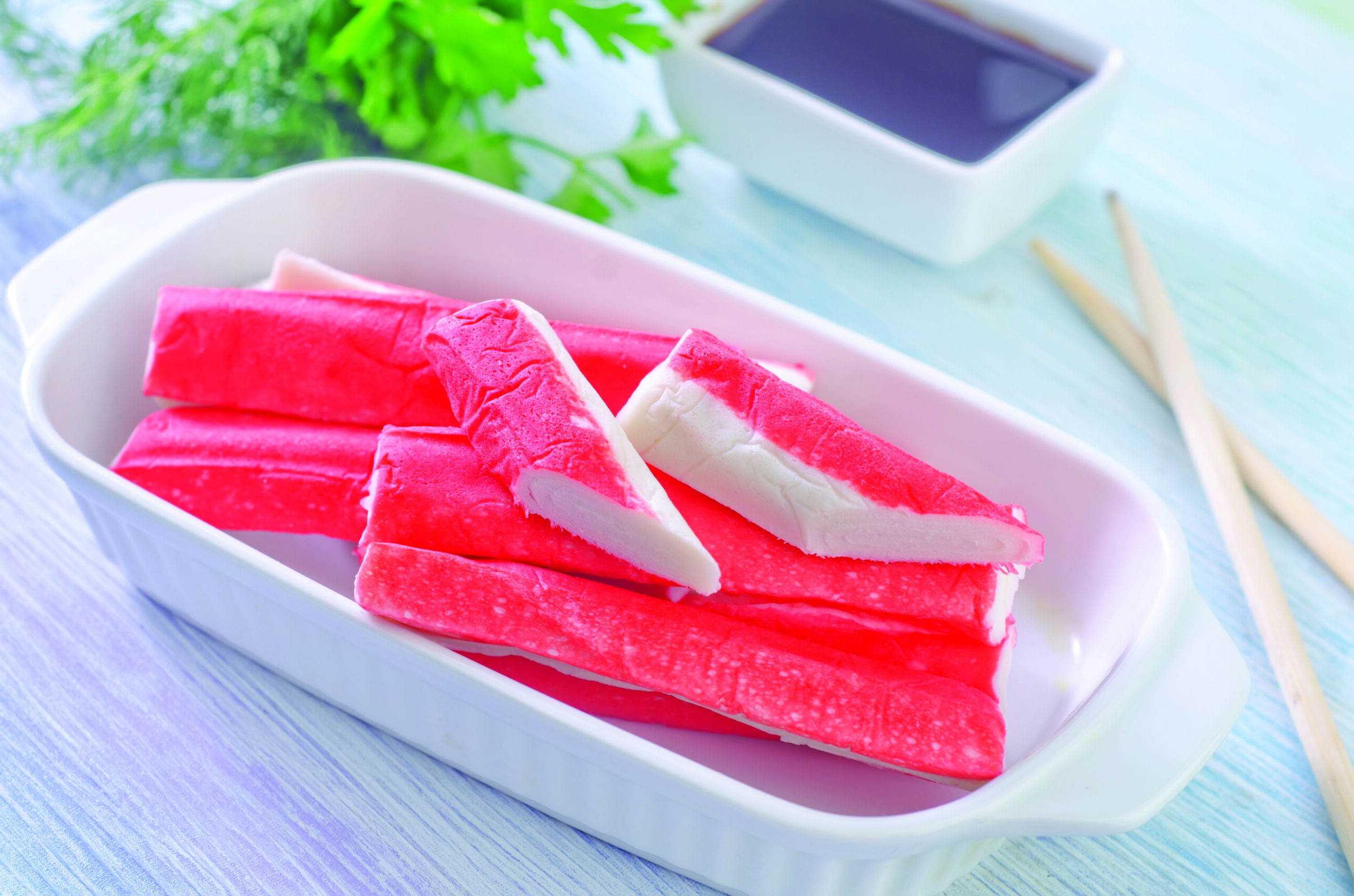
Surimi is one of the most technically demanding proteins in food manufacturing. Produced by washing, refining, and stabilising mechanically deboned white fish flesh into a neutral-tasting protein paste, it is the base ingredient behind imitation crab sticks, fish balls, kamaboko, and a growing range of value-added seafood products.
The global surimi processing market was valued at approximately USD 4.85 billion in 2026 and is projected to reach USD 7.83 billion by 2034, growth that reflects both rising demand for affordable protein and widening industrial food applications.
But the commercial opportunity comes with operational pressure that many processors are finding increasingly difficult to manage simultaneously. Raw material supply is volatile. Processing yields are sensitive to fish quality and equipment condition. And the cold chain demands unbroken temperature control across every stage from vessel to finished product.
Raw Material Volatility: The Upstream Challenge No Processor Can Ignore
Surimi production depends overwhelmingly on white-fleshed cold-water species: primarily Alaska pollock and Pacific whiting. These fisheries are subject to annual quota adjustments, environmental fluctuations, and increasingly, geopolitical factors that constrain supply from specific regions.
For processors, the consequence is not just price volatility – it is quality variability. Fish landed at different stages of the season, from different grounds, or held for varying durations before processing exhibit differences in protein functionality, fat content, and moisture level that directly affect gel strength, whiteness, and finished product consistency.
Procurement Strategies That Reduce Exposure
The most resilient surimi operations do not treat raw material procurement as a purchasing function alone. They integrate it with processing operations, so that incoming material quality drives process adjustments rather than the other way around.
Practical approaches that reduce raw material risk include:
- Dual-source procurement: qualifying suppliers from multiple regions and species to avoid single-point dependence on Alaska pollock quota decisions or a single flag-state fleet
- Incoming material grading: testing each batch for protein content, fat level, and gel-forming capacity before processing begins, using rapid test methods such as NIR or gel strength measurement on pilot-scale samples
- Formulation flexibility: developing processing parameters for two or three raw material profiles rather than a single ‘ideal’ specification, so that operators can adapt barrel profiles, washing cycles, and cryoprotectant levels when material quality shifts
- Forward contract structures: working with brokers to secure a proportion of seasonal supply at fixed price before the quota announcement, providing budget certainty even if volume flexibility remains limited
Species diversification is an emerging longer-term strategy. Tropical surimi—produced from threadfin bream and lizardfish species common in Southeast Asian waters—now accounts for approximately 28% of global supply. While gel strength characteristics differ from cold-water pollock, processing technology advances are narrowing the quality gap.
Improving Surimi Yield: Where Processors Leave the Most Value on the Table
Surimi yield—the proportion of raw fish that ends up as finished, frozen surimi—is the single most important driver of processing economics. A well-run operation recovers 18–22% of whole fish weight as finished surimi. Poorly performing lines may recover significantly less, with the difference entirely attributable to equipment performance, process control, and raw material handling.
Deboning and Mince Quality
The mechanical deboner (or meat separator) is where usable protein first parts company from bone and skin. The screen aperture size is critical: smaller openings improve bone exclusion but reduce yield as fine meat particles pass through with the bone fraction. For at-sea processing, 3–4 mm orifices are typically used to balance yield and quality; shore-based plants with more stable conditions can use 5 mm drums to increase throughput.
Temperature control during deboning is equally important. The friction generated by the separation process elevates mince temperature, and if not managed, protein denaturation begins before the washing stage.
Washing, Dewatering and the Role of Separation Equipment
The washing stage—where mince is diluted in chilled water and passed through screens to remove sarcoplasmic proteins, lipids, and off-odour compounds—is the most water-intensive part of the process and the stage where protein losses are highest if not managed carefully.
Over-washing improves colour and odour but increases the risk of myofibrillar protein loss, whilst under-washing leaves contaminants that suppress gel formation and reduce shelf stability.
The dewatering stage following washing is where screw press and finisher technology plays a critical role. Traditional screw press systems remove bulk wash water efficiently, but the finest mince particles—which carry a disproportionate share of the recovered protein—are often lost through the press screen. Upgrading the dewatering stage with precision separation equipment that recovers these fines can meaningfully improve overall yield without any change to upstream process parameters.
Refining and Cryoprotectant Addition
After dewatering, the surimi passes through a refiner or strainer to remove residual bones, scales, and connective tissue before cryoprotectants are added. Typically a combination of sucrose and sorbitol are blended in to protect protein functionality during frozen storage. Uniform blending at this stage is critical: uneven cryoprotectant distribution leads to localised freeze-damage that manifests as gel strength variation in the finished product. Consistent screen performance in the refining stage is a direct quality control mechanism.
Cold Chain Management: Protecting Quality from Vessel to Customer
Surimi is highly perishable before processing and temperature-sensitive throughout its shelf life thereafter. The functional properties that make surimi valuable—gel strength, water-holding capacity, whiteness—degrade rapidly above 0°C before processing and are permanently compromised by freeze-thaw cycles or temperature abuse in storage and transit.
Cold chain failures in surimi are predominantly operational rather than technological. The equipment for maintaining temperature integrity exists and is well understood. The challenge is the consistency with which it is applied across what is often a fragmented chain involving fishing vessels, onshore reception facilities, processing plants, frozen stores, and multiple freight handlers.
How Smaller Processors Can Compete in a Consolidated Market
The surimi market is highly concentrated at the top. Nippon Suisan, Maruha Nichiro, Thai Union, and a small number of other large integrated producers dominate global supply and set the quality benchmarks that buyers expect. For smaller or newer processors, the question of how to compete without equivalent scale is a genuine strategic challenge.
The answer is rarely to compete on volume. It is to compete on specificity: tighter species or grade focus, faster responsiveness to customer specification changes, the ability to process smaller runs economically, or geographic proximity to a growth market that larger players serve less efficiently.
On the equipment side, the key investment for smaller processors is in the precision and reliability of the dewatering and refining stages—not in scale. A well-maintained, correctly specified separation and finishing system that delivers consistent moisture content and clean mince fraction in every batch allows a smaller operation to match the quality of a much larger competitor. Inconsistency at those stages makes it impossible to build the buyer relationships on which sustainable growth depends.
Brown International has been supporting food processors across demanding protein separation applications for decades. Our engineering and food science teams work with processors to specify, install, and optimise separation equipment to the specific demands of their raw material and product range. If you are evaluating your current surimi processing line or planning a new facility, contact us to discuss how we can help.